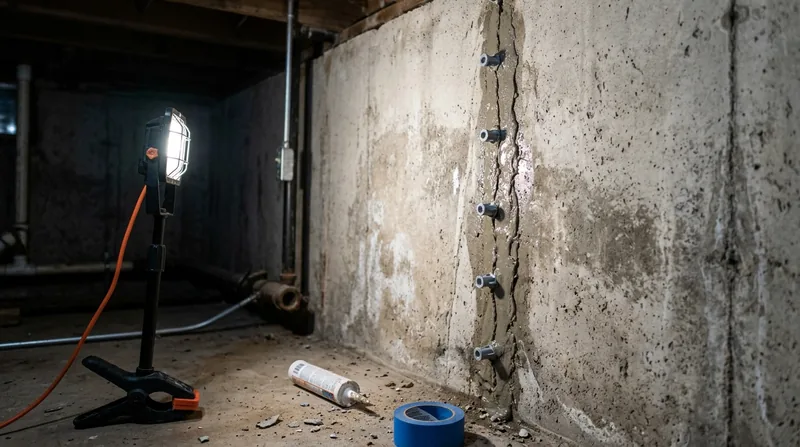




Foundation Crack Repair in Cedar Rapids
If you own a home in Cedar Rapids, you likely face a foundation that has been working against clay-rich glacial till and a rising water table for decades. From the 1890s brick and frame homes in Czech Village and Wellington Heights to the 1990s-2020s poured-concrete walkouts on the north and west edges, Foundation Crack Repair in Cedar Rapids is a routine part of keeping a basement dry. The 2008 Cedar River flood showed how fast water can climb, and every spring thaw pushes hydrostatic pressure against fieldstone, block, and poured walls alike. We inspect every crack, match it to the right method (epoxy or polyurethane injection for non-structural cracks, structural repair options for wider or shifting cracks), and never sell a one-size-fits-all patch. If you are also dealing with water on the floor, start with our basement waterproofing service.
Why Foundation Cracks Open Up in Cedar Rapids Clay and Loess Soil
Cedar Rapids sits on clay-rich glacial till with loess silt on the uplands, and that ground swells when wet and shrinks when dry. Homes along the Cedar River hold water through spring thaw, while east-side bungalows in Time Check and Kingston Village sit on slopes that channel runoff straight to the footing. Freeze-thaw cycles every winter work hairline cracks wider, and April and June thunderstorms drive the water table up fast. The result is the same pattern we see across Marion, Hiawatha, and Robins: vertical shrinkage cracks, stair-step block cracks, and horizontal cracks from lateral pressure.
- Vertical cracks in poured walls usually come from concrete curing and minor settlement, and they often respond well to injection.
- Stair-step cracks in block or early brick walls point to differential settlement and need a structural look before any injection.
- Horizontal cracks near the middle of a wall signal hydrostatic pressure or frost push, and they are a bowing-wall warning.
- White efflorescence and damp patches beside a crack tell you water is already moving through the wall.
We read the crack pattern before we quote, because the pattern tells us whether you need injection, drainage, or a structural repair.
Key info: A 1920s fieldstone foundation in Czech Village and a 2015 poured walkout in Robins fail for different reasons. Fieldstone and early block walls leak at the mortar joints and need repointing plus drainage, while newer poured walls usually crack at the shrinkage joint and respond well to epoxy injection.
For official permit questions on structural foundation work, check the City of Cedar Rapids building department before work begins; rules vary by jurisdiction and must be verified.
How We Diagnose and Repair Foundation Cracks in Cedar Rapids
We start below grade, not at the crack alone. A technician walks the basement perimeter, checks the footing drain and sump basin, tests for moisture with a meter, and maps every crack by width, direction, and whether it is wet or dormant. On river-side homes we also check grading and downspout extension, because a downspout dumping next to the wall reloads the same clay that cracked the foundation. You can book a free basement inspection to get that walkthrough at no cost.
- We clean the crack and drill injection ports at the angle the wall material requires.
- We flush the crack with water or compressed air to confirm it is open end to end.
- We seal the surface and inject epoxy for structural cracks or polyurethane for active leaks that need to flex.
- We let the material cure, cut the ports flush, and patch the surface.
- We recheck for moisture and recommend drainage work if the crack was fed by hydrostatic pressure.
Injection alone will not fix a wall that is being pushed by water, so we say so plainly when the crack is a symptom rather than the problem.
Key info: On a 1950s Cape Cod in Time Check, a wet vertical crack turned out to be fed by a clogged footing drain. We injected the crack, then cleared and repaired the drain tile so the wall stopped reloading every rain. Skipping the drainage step would have meant a callback within a season.
Crack Repair Methods We Use and When Each One Fits
Not every crack gets the same treatment. We match the method to the wall material, the crack width, and whether the crack is moving or stable. The table below shows the approaches we use most in Cedar Rapids and the conditions each one is built for.
| Approach | Description | Best for |
|---|---|---|
| Epoxy injection | Structural-grade epoxy bonds crack faces back together and restores wall strength. | Stable vertical cracks in poured concrete walls. |
| Polyurethane injection | Flexible foam expands into the crack and seals active water paths. | Wet, seeping cracks that need to move with the wall. |
| Surface sealing and parging | Hydraulic cement and parging close hairline and mortar-joint leaks. | Fieldstone and early block walls with minor seepage. |
| Carbon fiber straps | Straps stabilize a wall that is bowing inward from soil pressure. | Horizontal cracks and walls that have started to move. |
| Wall anchors | Anchors tie the wall back to stable soil and can pull it back over time. | Bowing walls where exterior access is limited. |
If the inspection shows movement, we hand the structural side to our bowing wall repair team rather than injecting a wall that needs to be stabilized first.
Foundation Crack Repair Cost in Cedar Rapids: What to Expect
Most single-crack injection jobs in Cedar Rapids start around $450, and that figure covers the inspection, port drilling, injection material, and surface patch for a typical poured-wall crack. The price climbs with crack length, the number of cracks, wall material (fieldstone and early block take longer), and whether drainage work is needed to stop the water feeding the crack. A structural repair such as carbon fiber straps or wall anchors is a different scope and is quoted after an on-site look. Get two or three estimates, compare what each one includes, and be wary of a quote that prices injection without checking why the crack is wet. Our full pricing overview shows how the numbers break down.
Foundation Crack Repair Near Me: How to Vet a Contractor Near Cedar Rapids
When you search for foundation crack repair near me, the list looks the same from every company. What separates a real waterproofing specialist from a general handyman is what happens before the first port is drilled. Ask for proof of licensing and insurance, ask for local references on homes built in the same era as yours, and ask whether the company pulls permits when structural work or drainage changes require them. In Cedar Rapids, work that alters drainage or the sanitary connection of a sump discharge commonly needs a permit, and thresholds vary by jurisdiction, so confirm with the building department. Reach out through our contact page and we will walk you through what your specific crack needs.
Foundation Crack Repair in Cedar Rapids: Pricing Guide
| Service | Price | Details |
|---|---|---|
| Single crack epoxy injection | Starting at $450 | Includes inspection, port drilling, epoxy injection, and surface patch for one poured-wall crack. |
| Polyurethane injection for active leaks | Starting at $550 | Flexible foam seal for wet, seeping cracks, priced by crack length and water activity. |
| Multiple crack package | Starting at $850 | Three or more cracks treated in one visit, with a discount on the per-crack rate. |
| Structural repair (straps or anchors) | On estimate | Bowing or shifting walls need an on-site structural assessment before a number is given. |
| Travel | Included | In Cedar Rapids and surrounding areas, no separate call-out or mileage fee. |
| Estimate | Free | Response within 24h at (319) 304-3845, no obligation to book. |
Indicative pricing, the exact cost depends on square footage, finish, and site access. Free personalized estimate within 24h at (319) 304-3845.


