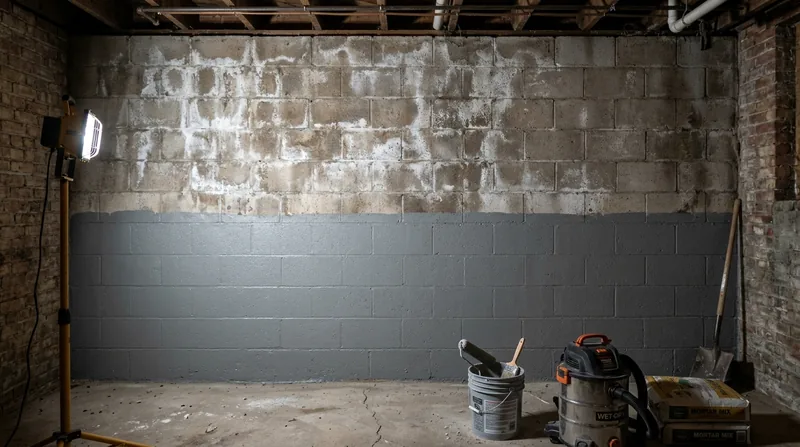




Basement Wall Sealing in Cedar Rapids
Basement Wall Sealing in Cedar Rapids is a targeted fix for damp, sweating, or efflorescence-stained foundation walls, and we tell you straight whether it will solve your problem. Cedar Rapids sits on clay-rich glacial till with loess silt on the uplands, and homes along the Cedar River hold water through spring thaw. That means the water table climbs fast with snowmelt and again with the heavy April and June thunderstorms, pushing moisture into fieldstone, early block, and poured walls alike. From the 1890s brick homes in Czech Village and New Bohemia to the 1990s and 2000s walkout basements on the north and west edges, the failure pattern is the same: damp wall, white powder, musty smell. We prep and seal the wall surface, but only after we confirm the water is coming through the wall and not from hydrostatic pressure under the footing. If it is pressure, we say so and point you to basement waterproofing instead of selling you a sealer that will fail.
Why Basement Wall Sealing Matters in Cedar Rapids' Clay and River-Side Housing Stock
Cedar Rapids basements take a beating from the local ground. The clay-rich glacial till drains slowly, so water sits against the foundation instead of percolating away, and the loess silt on the uplands turns to a slick paste during the spring thaw. Add deep freeze-thaw cycles and humid summer storms, and you get a dominant failure mode: wall seepage and efflorescence where water vapor migrates through the concrete or block and deposits salts on the interior face. Sealing addresses that vapor path. It does not address standing water against the footing, and we tell homeowners which one they have before we quote.
Older housing stock needs extra attention. Fieldstone and early block walls in Wellington Heights and Time Check were often parged with a soft mortar that has eroded over a century, leaving open joints and porous faces. Poured walls in newer subdivisions crack at shrinkage points and at tie holes. Each of these takes a different surface prep and a different sealer.
- We remove efflorescence and loose parging so the sealer bonds to sound masonry, not to salt crust or dust.
- We test for active moisture vapor before sealing, because a wet wall traps sealer and blisters it off.
- We identify hydrostatic pressure signs (water at the wall-floor joint, staining in a horizontal band) and refer those to drain tile work instead of sealing.
- We seal tie holes and non-structural shrinkage cracks with the right product, not a smeared coat over everything.
- We leave the wall breathable where a membrane is wrong for the wall type, especially on old fieldstone.
That diagnostic step is the difference between a sealer that lasts and one that peels within a season.
Key info: A homeowner in Palo called us about white powder on a 1950s block wall. The efflorescence was cosmetic, but a wet band at the floor joint told us the footing drain was failing. We sealed the wall face and scheduled a drain tile evaluation. Sealing alone would have hidden the symptom for one winter.
For permit questions on structural or drainage work, the City of Cedar Rapids Building Services Division is the authority, and rules vary by jurisdiction, so verify before you dig. See cedar-rapids.org for current requirements.
How We Seal a Basement Wall in Cedar Rapids, Step by Step
Our process starts with a free basement inspection, because the sealer choice depends on what we find. We walk the interior perimeter, check the wall-floor joint, look for efflorescence patterns, and test moisture vapor. On a 1920s brick home in Czech Village, that means checking the original parging and any prior paint or sealer coats that need to come off. On a 2005 poured walkout in Robins, it means checking form tie holes and shrinkage cracks. Then we prep, seal, and document what we did and what we did not fix.
- We inspect the wall and classify the moisture source as vapor transmission, capillary action, or hydrostatic pressure.
- We remove efflorescence, loose mortar, and failing coatings with wire brushes and masonry cleaners.
- We fill tie holes and non-structural cracks with hydraulic cement or an appropriate patch before sealing.
- We apply a penetrating sealer on porous block and fieldstone, or a membrane sealer on poured walls where vapor drive is low.
- We check the wall-floor joint and recommend crack injection or drain tile if the joint is the real entry point.
- We leave you a written summary of what was sealed and what needs monitoring.
If the inspection shows pressure, we tell you before you spend money on sealer. That is honest guidance, and it is why homeowners in Marion and Hiawatha call us back.
Key info: A 1960s ranch in Kingston Village had damp walls every April but no standing water. We removed chalky efflorescence, patched two tie holes, and applied a penetrating sealer. The wall stayed dry through the next spring thaw, and we noted the downspout extension was short and needed to be extended away from the foundation.
If your inspection turns up a failing perimeter drain, we handle that under interior drain tile, and the two scopes are quoted separately so you can see what each one buys you.
Sealer Approaches We Use on Cedar Rapids Basement Walls
Not every wall takes the same product. The table below shows the main approaches we use on local housing stock, and which wall types and moisture conditions each one fits. We pick based on the inspection, not on what is easiest to apply.
| Approach | Description | Best for |
|---|---|---|
| Penetrating sealer | Sinks into porous masonry and blocks capillary suction without a surface film. | Block and fieldstone walls with efflorescence and minor dampness. |
| Membrane sealer | Forms a flexible coating that bridges hairline cracks and resists vapor drive. | Poured walls in newer subdivisions with shrinkage cracks. |
| Crystalline waterproofing | Reacts with moisture in concrete to grow crystals that plug pores and hairline cracks. | Damp poured walls where a film coating is not wanted. |
| Crack injection (epoxy or polyurethane) | Ports are drilled and resin is pumped into active or structural cracks. | Isolated cracks that leak, not general wall dampness. |
| Parging repair plus sealer | We rebuild eroded mortar coats on old masonry before sealing the face. | 1890s to 1930s brick and stone walls with failing parging. |
Each approach has limits, and we tell you when a sealer is the wrong tool for the water you are seeing.
Basement Wall Sealing Cost in Cedar Rapids: What to Expect
Most basement wall sealing jobs in Cedar Rapids start around $1,500, and that figure covers the typical single-wall or small-basement scope: inspection, surface prep, efflorescence removal, patching, and a penetrating or membrane sealer. The number moves with wall length, wall type, and how much prep the masonry needs. A 1920s fieldstone wall in New Bohemia with failing parging takes more labor than a clean 2005 poured wall in Robins. Access matters too: a finished basement with paneling and stored belongings slows the work, and so does a low ceiling.
We quote after the inspection, not over the phone, because the moisture source decides the scope. If the wall needs crack injection or the joint shows pressure, that changes the number and we tell you before we start. Getting two or three estimates is smart, and we encourage you to compare what each bidder includes: prep, patching, sealer type, and whether they tested for vapor first. Our full pricing overview is at our pricing page, and it breaks down the ranges we see across the service area.
What to Look for When Hiring a Basement Wall Sealing Contractor Near Cedar Rapids
Hiring for wall sealing near Cedar Rapids comes down to a few checks that separate a specialist from a general handyman. Ask for proof of licensing and insurance, and ask whether the company carries both general liability and workers' compensation. Get at least two or three written estimates that list prep steps, sealer product, and what happens if the inspection finds pressure. Ask for local references, especially on the same wall type as yours, because fieldstone and poured concrete take different skills. Confirm who pulls any permit if the scope touches structural or drainage work, and verify with the City of Cedar Rapids Building Services Division. If you are in an HOA, check rules on exterior work and discharge lines before scheduling.
To schedule an inspection, reach out through our contact page or call (319) 304-3845.
Basement Wall Sealing in Cedar Rapids: Pricing Guide
| Service | Price | Details |
|---|---|---|
| Single wall, penetrating sealer | Starting at $1,500 | Includes inspection, efflorescence removal, patching, and penetrating sealer on one wall. |
| Full basement, membrane sealer | Starting at $2,400 | Covers poured walls with shrinkage cracks; finished basements and low ceilings push the price up. |
| Old masonry with parging repair | Starting at $2,900 | Fieldstone and early block walls need mortar repair before sealing; failing parging adds labor. |
| Crack injection add-on | Starting at $450 | Epoxy or polyurethane injection for isolated leaking cracks found during the inspection. |
| Complex or large-scale job | On estimate | Multiple walls, active pressure, or structural concerns need an on-site look before pricing. |
| Estimate | Free | Free basement inspection and written quote, response within 24 hours at (319) 304-3845. |
Indicative pricing, the exact cost depends on square footage, finish, and site access. Free personalized estimate within 24h at (319) 304-3845.


